
Organize Your Thoughts, Transform Your Life: The Obriko Method
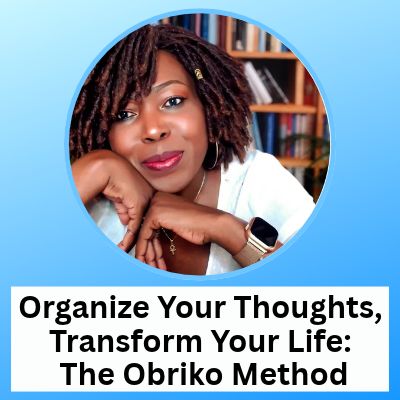
How hypnotherapist Herrieta Obriko teaches us to take control of our thoughts, and why it matters for creating a peaceful, organized home.
Have you ever noticed how one unpleasant interaction can ruin an otherwise perfectly good day?
Maybe someone criticized you at work. Maybe a family member said something hurtful. Or perhaps you’re worried about something that hasn’t even happened yet.
Hours later, you’re still thinking about it.
You’re replaying the conversation, imagining what you should have said, or worrying about what might happen next.
Meanwhile, the things you actually wanted to accomplish have fallen by the wayside.
What if you could learn to interrupt that cycle?
My friend Herrieta Obriko, a clinical hypnotherapist and founder of The Obriko Method, has taught me something incredibly valuable: We have more influence over our thoughts, and consequently, our emotional experiences, than many of us realize.
And learning to use that influence can be life-changing.
Meet Herrieta Obriko
Herrieta, who also goes by H., has spent approximately a decade helping people understand and change the mental and emotional patterns that keep them stuck.
But her interest in understanding the mind began with her own struggles.
As a teenager, Herrieta experienced severe depression and anxiety. She believed something was fundamentally wrong with her and couldn’t imagine living a life filled with happiness and confidence.
Her journey eventually led her to hypnotherapy and a deeper exploration of how the mind works.
Today, she’s passionate about helping people move beyond simply surviving and toward a life filled with joy, confidence, and peace of mind.
Her philosophy is rooted in a powerful idea: The mind is a tool, and we can learn how to use it more effectively.
Through her Obriko Method, Herrieta helps people examine the thoughts, interpretations, and beliefs that influence their emotional experiences.
Rather than feeling completely at the mercy of whatever happens around us, we can practice becoming more conscious of how we respond.
The Problem Isn’t Always What’s Happening. It’s What Happens Next in Our Minds.
Think about two people experiencing the same situation.
Both receive a critical comment from a coworker.
One thinks, Maybe there’s something useful I can learn from that.
The other thinks, Nobody appreciates me. I always mess everything up.
The event is the same, but their interpretations, and likely their emotional experiences, are very different.
Of course, difficult emotions aren’t always something we can simply switch off. Stress, trauma, health conditions, and circumstances can all affect how we feel.
But learning to recognize our thought patterns can give us more choices about what happens next.
One of the most practical exercises Herrieta has shared with me is a simple framework for working through upsetting situations.
Five Steps to Reclaim Your Thoughts
When something is bothering you, try walking yourself through these questions.
- Problem: What’s bothering me?
Identify the situation that’s consuming your attention.
Maybe someone made an unfair comment. Maybe you’re overwhelmed by responsibilities. Maybe you’re worried about a decision.
Simply name the problem.
- State the facts: What actually happened?
Separate observable facts from the stories you’re telling yourself.
For example:
Fact: My coworker criticized a decision I made.
Interpretation: Everyone thinks I’m incompetent.
Those are two very different things.
Our minds are remarkably good at filling in missing information, often with assumptions that make us feel worse.
- Is This Problem Within My Control?
Ask yourself whether the problem is something you can actually control.
For example, you can’t control someone else’s opinions, reactions, or behavior. You can’t change the past, prevent every disappointment, or make someone treat you the way you’d like to be treated.
But you can control many of your own choices, actions, boundaries, and responses.
Recognizing the difference helps you stop wasting energy trying to change things that are outside your control.
- What Can I Do? Do It.
If the problem is within your control, what can you do to resolve it?
Identify one practical step and take action. Maybe you need to make a decision, complete a task you’ve been avoiding, or have an important conversation.
If the problem is outside your control, what can you control?
You may not be able to change someone else’s behavior, but you can decide how you respond, whether to establish boundaries, or how much attention you give the situation.
Sometimes the most powerful action is accepting that you cannot change something and choosing to redirect your energy toward something you can influence.
The goal is to stop spending your energy on what you can’t control and start taking action on what you can.
- Gratitude: What’s the lesson, and how can I return to joy?
Ask yourself what you’ve learned.
Perhaps the experience taught you something about boundaries, communication, or what matters most to you.
Then consciously return your attention to something you appreciate.
Gratitude doesn’t mean pretending something unpleasant didn’t happen. It means not allowing that experience to consume more of your life than necessary.
What Does This Have to Do With Home Organizing?
Everything!
As a professional home organizer, I’ve learned that clutter is rarely just about having too much stuff.
Our thoughts, emotions, habits, and beliefs play enormous roles in how we manage our homes.
Consider someone who feels completely overwhelmed by clutter.
They might think:
My house is a disaster. I’m terrible at keeping things organized. I’ll never get this under control.
Those thoughts can create feelings of shame, anxiety, and hopelessness.
And when someone feels overwhelmed, getting started becomes even harder.
Now imagine applying Herrieta’s exercise.
Problem: My kitchen counter is covered in clutter, and it’s stressing me out.
State the facts: There are unopened letters, a few dishes, some groceries, and several things that don’t belong here. The counter is cluttered, but that doesn’t mean I’m a failure.
In my control: I can decide what to do with the items on the counter. I can create a better system for incoming mail.
What can I do? Do it: I’ll spend 10 minutes clearing the counter and put a recycling bin near the place where I sort my mail.
Gratitude: I’m grateful that I have a home to care for, and I’ve learned that a simple mail routine could prevent this problem from recurring. Now I can enjoy my kitchen!
Notice what changed.
The kitchen didn’t magically organize itself.
But the person shifted from self-criticism and helplessness to a practical, manageable action.
And that shift can make all the difference.
Changing Your Thoughts Can Help Change Your Habits
The same approach can help with other common organizing challenges.
Maybe you feel guilty donating gifts you never use.
Maybe you keep things because you’re afraid you’ll need them someday.
Maybe you procrastinate because you believe organizing your entire house will be exhausting.
When you recognize the thoughts driving those behaviors, you can begin questioning whether they’re actually helping you.
You don’t have to believe every thought that passes through your mind.
And you don’t have to keep repeating a habit simply because you’ve been doing it for years.
Changing long-established patterns takes practice. Sometimes additional support is helpful, particularly when anxiety, trauma, or other mental health challenges are involved.
But even small changes in how we think about our homes can make it easier to take action.
Make Room for Joy
One of the things I appreciate most about Herrieta’s work is her emphasis on joy.
It’s easy to become so consumed by problems, criticism, responsibilities, and worries that we forget to enjoy our lives.
The same thing happens with clutter.
We become so focused on everything that’s wrong with our homes that we lose sight of what our homes are actually for.
They’re places to rest, create, connect, celebrate, and enjoy the things that matter to us.
Getting organized isn’t about achieving perfection.
It’s about removing the obstacles that prevent us from living the lives we want.
And sometimes the first obstacle isn’t sitting on the kitchen counter.
It’s a thought we’ve been carrying around for years.
If you’re interested in learning more about Herrieta’s approach to understanding the mind and creating lasting emotional change, visit The Obriko Method or read more about Herrieta and her story.
Because when you begin creating more space in your mind, you may discover that creating more space in your home becomes easier, too.

Posted By Jean Prominski, Certified Professional Organizer
- Follow me on Instagram @seattlesparkle
- Join my Facebook Group, Declutter and Organize with Seattle Sparkle.
- Ready to book a consultation? Complete this form.