

Instead of White-Knuckling Discipline, Create the Conditions for Success
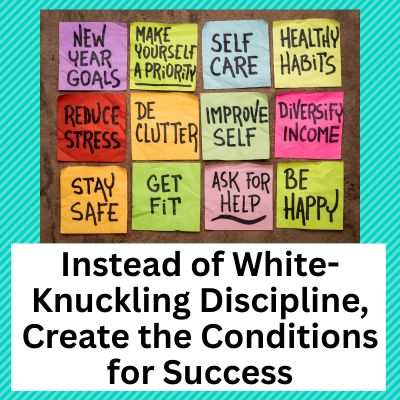
Instead of White-Knuckling Discipline, Create the Conditions for Success
A More Sustainable Approach for 2026
We tend to talk about discipline as a personal trait, something you either have or you do not. When discipline slips, the story often turns inward: I’ve lost my willpower. I need to try harder. I just have to be more disciplined.
Over time, though, I’ve noticed a different and far more compassionate pattern, both in my own life and in my work with others. Discipline does not disappear randomly. It is deeply connected to the conditions we are living in. When life feels stable, supported, and resourced, discipline tends to emerge naturally. When those foundations are shaky, discipline often struggles to keep up.
Discipline is often treated like a muscle that can be strengthened through force. In reality, it behaves more like a response. It shows up when certain foundational needs are being met. When life feels predictable enough, when energy is not constantly being drained, and when systems are working in our favor, discipline often feels almost effortless. Routines happen without much thought. Choices align with values because the path feels clear and manageable.
When stability erodes through illness, stress, grief, major transitions, financial pressure, or ongoing overwhelm, discipline does not fail. It adapts. Sometimes it goes quiet in order to conserve energy. That is not a character flaw. It is information.
When discipline drops, many people respond by tightening their grip. More rules. More pressure. More self-talk about pushing through. This is what I think of as white-knuckling discipline. It can work for short bursts, but it is rarely sustainable. Over time, the effort required keeps increasing while the results keep diminishing. Burnout, rebound behavior, and self-criticism often follow.
In 2026, I believe we are ready for a different approach.
Instead of asking how to force ourselves to be more disciplined, we can ask a more supportive question: What conditions make discipline feel natural again? When stability is present, discipline does not need to shout. It shows up quietly and consistently.
Stability can look like adequate rest and recovery, predictable rhythms, physical environments that support ease, emotional safety, and systems that reduce friction instead of adding it. When these pieces are in place, discipline often returns without fanfare. Not because you tried harder, but because life stopped asking so much of you at once.
Tangible ways to create better conditions for discipline
Creating the conditions for success means designing your life so the supportive choice is also the easiest one. That can look like:
- Protecting rest as non-negotiable, including sleep, recovery time, and margin in your schedule, especially during demanding seasons
- Reducing friction in your environment by organizing spaces so what you need is visible, accessible, and easy to put away
- Planning for low-energy days, not just ideal ones, so routines can flex instead of collapse
- Limiting decision fatigue by simplifying recurring choices around food, clothing, schedules, or daily tasks
- Eating in a way that supports your specific body, rather than following generic rules. For example, noticing how different foods affect your energy and focus. For some bodies, heavy carbohydrates lead to brain fog and fatigue, while protein and healthy fats create clarity and sustained energy
- Practicing inner integrity, by only committing to what you genuinely know you will do. Over-promising and under-delivering erodes self-trust. Saying less, and following through, builds credibility with your own nervous system
- Letting systems do the work, rather than relying on motivation or willpower, which fluctuate based on stress and health
- Lowering the bar strategically, choosing consistency over intensity and sustainability over perfection
This kind of discipline is quieter. It does not look impressive from the outside. But it lasts. These actions create the conditions where discipline can re-emerge organically.
Discipline does not have to mean rigidity. It does not have to mean deprivation. And it certainly does not have to mean punishment. In its healthiest form, discipline is alignment made repeatable. It is what happens when your environment, energy, and expectations are working together rather than competing with one another.
As we think about discipline in 2026, I am less interested in harder goals and stricter rules. I am more interested in sturdier foundations. What would change if discipline was not something you had to wrestle into submission, but something that emerged naturally once your life felt more stable?
The goal does not have to be gripping tighter. It can be building better scaffolding. Discipline does not disappear when things get hard. It waits for safety, for support, and for conditions that allow it to return. When those conditions are restored, discipline often comes back quietly, steadily, and without force.

Posted By Jean Prominski, Certified Professional Organizer
- Follow me on Instagram @seattlesparkle
- Join my Facebook Group, Declutter and Organize with Seattle Sparkle.
- Ready to book a consultation? Complete this form.